
Images shape decisions before words do
When people look at an experience listing, the first thing they take in is the image. Long before they read a single line of text, they’ve already formed an impression.
That makes image policy a serious editorial question for a media site, not a cosmetic one. Misleading imagery isn’t just bad design — it shapes expectations, and unmet expectations ruin experiences.
This article lays out what we do, what we don’t, and why.
Why AI-generated images exist on Hareto at all
Some of our pages — and some of our journal articles — use AI-generated imagery. We want to explain that openly rather than let readers discover it by accident.
Copyright constraints. We can’t use a venue’s photos without permission. Photos pulled from review platforms or street view aren’t fair game for commercial use either. For spots without strong public-facing media, usable real photos are genuinely scarce.
Atmosphere supplementation. Even when real photos exist, they may not show specific moods — say, “quiet afternoon” or “a family setting.” When that gap is meaningful to the article, we sometimes use generated images to fill it.
Journal illustrations. Articles like this one — about philosophy, methodology, or media policy — don’t have a specific venue to photograph. Abstract or thematic imagery suits them better. That’s where AI imagery tends to be most appropriate.
But we never pretend an AI image is a photograph of a real place. Mistaking generated images for documentation is a form of misinformation, and avoiding that is the central rule we operate by.
”Photo edition” vs. “illustration edition”
For spot pages, we maintain two image conventions.
Photo edition — official venue images, permitted photographs, or real-source material. This is what we want on a spot page when possible, because spot pages need to represent reality as faithfully as we can.
Illustration edition — used when real photos aren’t available or when atmosphere needs to be conveyed without misrepresentation. The visual style is deliberately recognizable as illustration, not photography.
As of April 2026, all 50 of Hareto’s listed spots use the photo edition. New spots default to the photo edition wherever possible.
When illustration is used, the style is chosen so that no reasonable viewer would mistake it for a real photo of the actual venue. Visual ambiguity is the line we try not to cross.
Journal articles play by different rules
Journal articles like this one talk about ideas, not specific venues. Showing a real photo of a particular workshop wouldn’t fit the argument — it might actively mislead by suggesting that workshop is the topic.
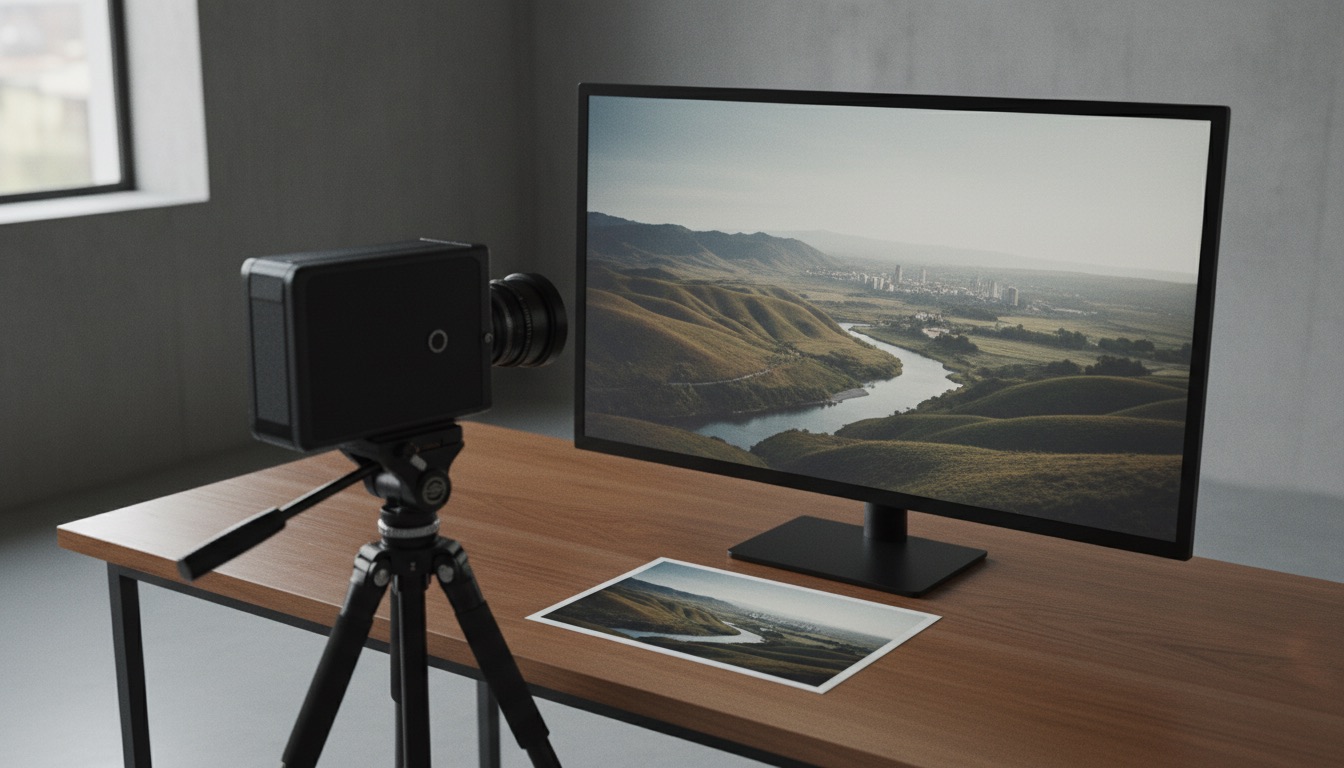
So journal images lean on abstract or thematic AI imagery. The image you see on this article was generated for that purpose.
The constraint we hold ourselves to is the same: even in journal articles, no image should be readable as documentary evidence of a specific spot.
The text-hallucination problem
AI image generation has a particular failure mode we’ve encountered repeatedly: hallucinated text.
Generated images often include what looks like text on signs, menus, or storefronts. Up close, the characters are nonsense. Sometimes a sign carries what reads like a real-looking shop name — invented by the model.
For a media site about real venues, this is unacceptable. A fabricated shop name appearing on a generated image could be read as documentary.
We prompt explicitly against text, signage, and storefront detail. We also review every generated image manually before publishing. It’s tedious; it’s the work.
Why we’re publishing this policy at all
Media trust isn’t built only on accurate prose. Images carry as much weight, sometimes more. If readers start wondering “did they make this with AI?” — the trust is already eroded, whether or not the suspicion is true.
The way out is transparency. We tell you we use AI imagery, where we use it, and what rules we apply. You shouldn’t have to wonder.
We don’t claim perfect execution. AI imagery occasionally slips past human review. Editorial standards drift if you let them. But naming the policy out loud, and improving it as we learn, is what we can commit to.
The first impression of any spot is an image. We don’t want to lose your trust at the door.